Best Time for Birdwatching in Monteverde, Costa Rica
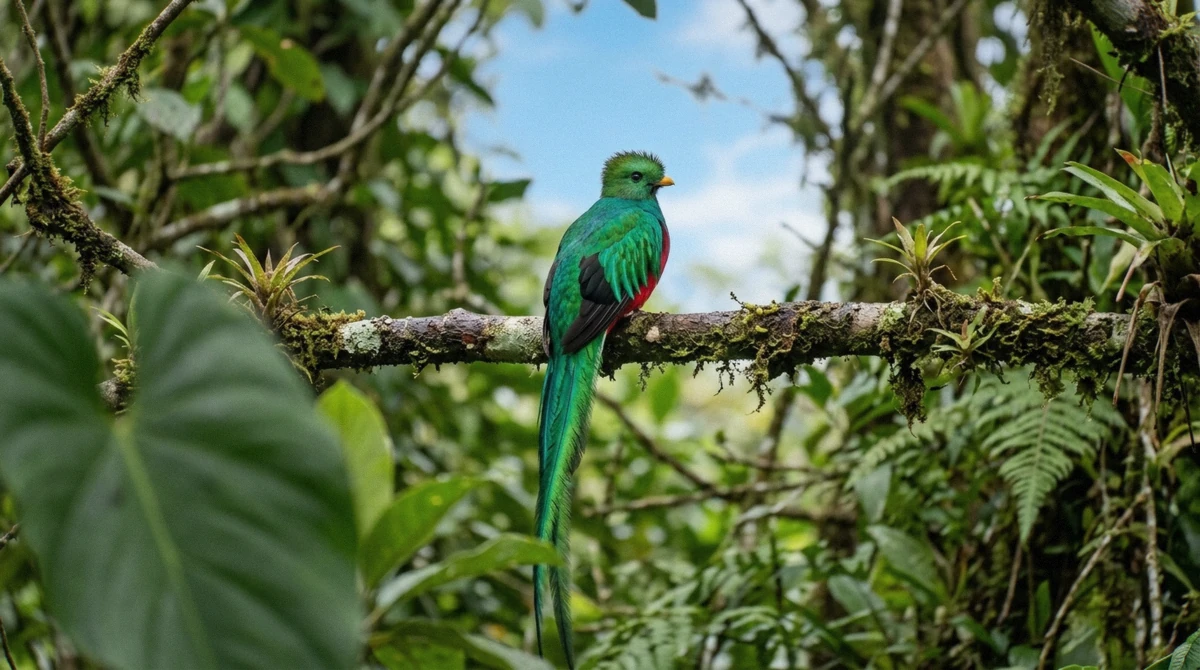
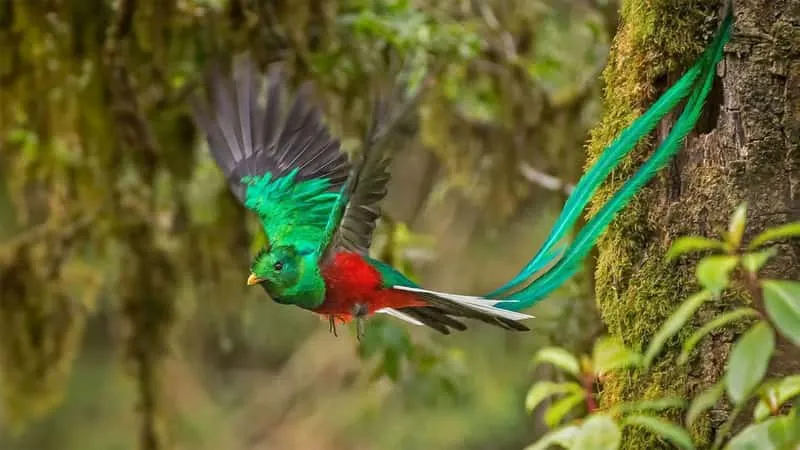
The best time for birdwatching in Monteverde is March to June, when the resplendent quetzal is on its breeding season near the reserve's fruiting laurel trees and the three-wattled bellbird's odd metallic call carries across the canopy at its loudest. Quetzals are altitudinal migrants, so counts drop once the season ends and birds move downslope toward the Pacific and Caribbean forests, which is the fact that gets misreported most often online. The broader dry season, December through April, still gives the clearest mornings and driest trails of the year overall, while the wet season trades some comfort for thinner crowds. Whatever month you land in, mornings are the reliable window every day of the year.
Quick answer
The best months for birdwatching in Monteverde run March to June, when the resplendent quetzal is breeding near its nest cavities and the three-wattled bellbird calls loudest, with February and July as the soft edges of that window. The broader dry season, December to April, still gives the clearest mornings and driest trails of the year even outside peak quetzal activity.
Key takeaways
- March to June is quetzal breeding season, the best stretch for finding one near a nest cavity, detailed on our cloud forest birds guide
- Bellbirds call loudest in May and June, so a morning built around the bellbird sunrise tour pays off then
- December through April is the broader dry season, with the clearest skies and driest trails even after quetzals have moved on
- North American migrant warblers add species from October through March, a different reason to visit the shoulder months
- Quetzals are altitudinal migrants, so counts thin from August through January as birds move downslope, not because they've disappeared
- The sunrise Curi-Cancha tour from $45 times its start to the hour birds are most active, whatever month you book
Month by Month at a Glance
A quick read on what a visit in any given month actually looks like on the ground, before the quetzal and bellbird calendars below go into more depth.
| Month | What's happening | Crowds | Trail note |
|---|---|---|---|
| January | Quetzals thin, having moved downslope after the previous breeding season | High, dry-season holiday crowds | Dry, windy on exposed ridges |
| February | Edge of the quetzal breeding window opens, migrant warblers still present | High, dry season | Dry, still breezy on the divide |
| March | Quetzal breeding season opens in earnest, bellbirds begin calling | High, dry season | Dry, generally clear mornings |
| April | Quetzal breeding continues through the last of the dry season | High, dry season closing out | Dry, occasional late-month showers |
| May | Quetzal breeding continues, bellbird calling approaches its peak | Moderate, dry-season crowds thinning | First rains, mornings still mostly dry |
| June | Peak of both quetzal breeding and bellbird calling | Moderate | Wet season underway, clear mornings typical |
| July | Edge of both quetzal breeding and bellbird season, birds beginning to move on | Moderate | Wet, afternoon showers common |
| August | Quetzals largely moved downslope, bellbirds mostly gone to lowland forests | Low to moderate | Wet, lush and green |
| September | Wettest period of the year regionally, resident species remain | Low | Wettest month, muddy trails |
| October | Wettest period continues, migrant warblers begin arriving | Low | Wet, muddy underfoot |
| November | Wet season closing out, migrant warblers established for the season | Low to moderate | Wet, improving late in the month |
| December | Dry season begins, migrant warblers present, trade winds pick up | High, holiday season | Drying out, breezy on exposed ridges |
No two adjacent months read as identical here, but the closest overlap is June and July, when both headline species are still active even as the wet season is already underway. The clearest divide on the calendar isn't birds at all, it's crowds: the dry season months from December through April carry noticeably more visitors than the wet season stretch from May through November.
Dry Season and Wet Season for Birders
Monteverde's dry season runs roughly December to April and the wet season May to November, with September and October the wettest months of the year. Mornings are typically the clearest part of the day in both seasons, and cloud or mist moving through the canopy is normal at any time of year, the reserves themselves treat it as part of the experience rather than a flaw in the trip.
Santa Elena Cloud Forest Reserve publishes humidity above 90% year round, which is a fair summary of what to expect on any trail in the cluster of reserves. The dry season's advantage for birding is comfort more than species count: drier trails, less mud, and generally clearer skies for spotting movement in the canopy. The wet season's advantage is quieter reserves and lush, active vegetation, with rain that tends to arrive in the afternoon rather than washing out a morning walk.
Neither season is the wrong one to book, they simply trade different things: comfort and crowds against quiet and cover.
Mornings That Suit the Season
The cheapest guided morning on this site runs from $40, and the sunrise Curi-Cancha tour from $45 keeps the same early start whatever month you visit.
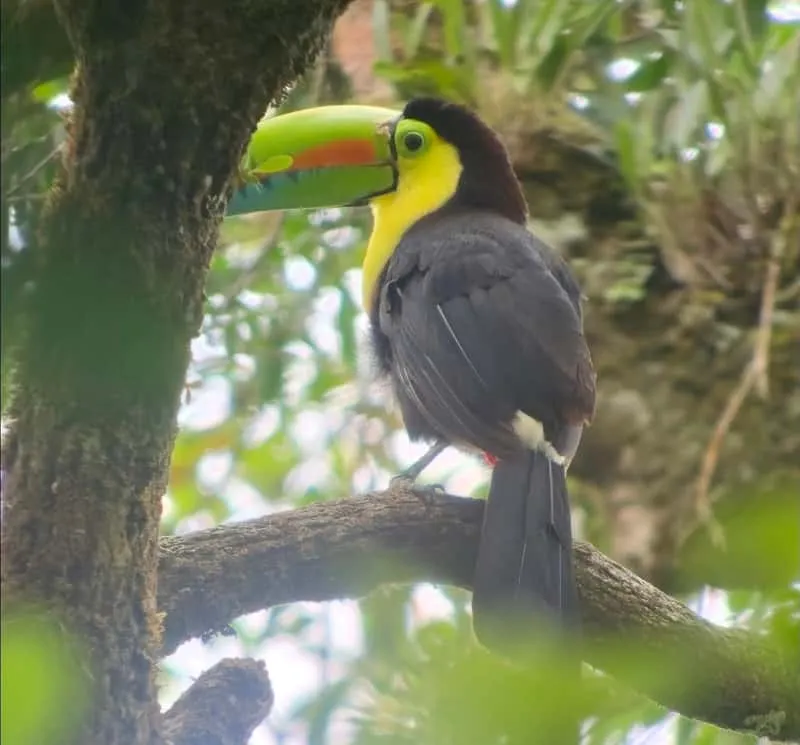 from $40
 Monteverde: Bird Watching Tour in the Curi-Cancha Reserve
Walk the trails of the Curi-Cancha Reserve with an expert birding guide. This 2.5-hour morning tour through primary cloud forest is one of Monteverde's most popular birdwatching experiences…
- Most-reviewed tour in Curi-Cancha
- Quetzals & bellbirds regularly spotted
- 2.5-hour guided morning walk
- Free cancellation
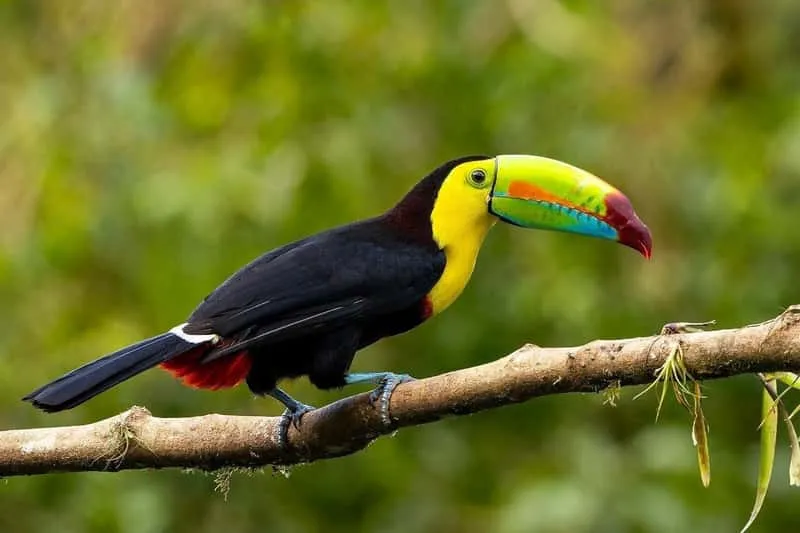 from $45
 Monteverde: Sunrise Bird-Watching Tour in Curi-Cancha
Catch the best light for birdwatching on this sunrise tour inside the Curi-Cancha Reserve. Early morning is when cloud forest birds are most active — quetzals, bellbirds, and…
- Sunrise — birds at peak activity
- Quetzals at morning feeding time
- Best light for bird photography
- Small group, quiet trails
 from $45
 Monteverde Quetzal Birdwatching Tour with Expert Guide
This tour is designed specifically to search for the resplendent quetzal — one of the most breathtaking birds in the Americas. An expert guide takes you to the…
- Dedicated quetzal search tour
- Guide knows nesting & feeding trees
- 2.5 hours in cloud forest
- Free cancellation
The Quetzal Calendar
The resplendent quetzal breeds in Costa Rica from March to June, extending in some years from February into July. During that window pairs nest in a cavity in rotted wood, often an old woodpecker hole, laying two eggs that both parents incubate for about 18 days before the young fledge roughly a month later. Some pairs manage two clutches in a season.
This is the window when a guide's morning is built around a known nest tree rather than a hopeful scan of the canopy.
Quetzals are altitudinal migrants. A radio-telemetry study at Monteverde by Powell and Björk, published in Bird Conservation International, tracked birds breeding high on the divide and then moving downslope to Pacific and Caribbean premontane forests once breeding ends, following the fruiting of wild avocados in the laurel family. The practical read for a visitor: birds are concentrated and easiest to find around the reserves during the breeding months, and thinner and more scattered afterward, not gone for good.
For what the bird actually looks like and where each reserve's known nest sites tend to sit, see our cloud forest birds guide.
The Bellbird Calendar
The three-wattled bellbird is reported present and calling in Monteverde roughly March to July, with peak calling most often reported in May and June. Like the quetzal, it is an altitudinal migrant: birds move to lowland forests of northern Costa Rica and Nicaragua for the rest of the year. Males call from high exposed perches, repeatedly, through most of the daylight hours, which is exactly why a guide can often locate one by ear well before it's visible in the canopy.
May and June overlap the tail end of quetzal breeding and the peak of bellbird calling, which makes late spring the single busiest stretch on the calendar for the two headline species at once, even as the wet season is already beginning.
Species by Season
A compact version of the calendar above, species first rather than month first. Our cloud forest birds guide carries the full species-by-species detail; this table is only the seasonal shorthand.
| Species | Season present | Note |
|---|---|---|
| Resplendent quetzal | Breeding March to June, edges February and July, then downslope | Best odds near known nest cavities and Lauraceae stands |
| Three-wattled bellbird | Roughly March to July, peak calling May and June | Calls from high exposed perches through most of the day |
| North American migrant warblers | October to March | Wilson's, Tennessee and black-and-white warbler among them |
| Resident species (200+ recorded at Curi-Cancha and Santa Elena) | Year round | Present regardless of season, the backbone of any morning's list |
Pick Your Month
If you want the best odds at a quetzal
come March to June, ideally April or May before the wet season fully sets in.
If the bellbird's call is the target
book May or June, when calling activity is reported at its peak.
If you want the driest trails and clearest mornings overall
aim for December through April, even if that means missing peak quetzal breeding.
If you want fewer crowds and don't mind rain
September or October are quietest, though also the wettest months regionally.
If migrant warblers add to your list
any month from October to March adds North American species to the resident count.
What the Weather Actually Does to a Morning
Temperatures in the cloud forest are cool for the tropics, commonly in the high teens Celsius by day, roughly 17 to 20 degrees, and cooler still with wind on the Continental Divide. December through February brings the trade winds, and that's a real birding factor: exposed ridges get gusty in those months and birds tend to sit low in cover rather than working the open canopy, so a guide will often shift a route toward more sheltered trail sections.
Cloud and mist can roll through at any time of year and in either season, and the reserves themselves treat it as normal rather than a sign of bad conditions. The single weather variable that changes a morning the most, across every season, is wind, not rain. A calm, overcast morning in October can produce as much bird activity as a bright, dry morning in March; a gusty morning on the divide in January can be quieter than either, whatever the calendar says about season.
If you can only pick one window, March to June is the honest answer, not because the rest of the year is poor for birding but because it's the only stretch that stacks quetzal breeding, bellbird calling and reasonably dry trails on top of each other. December through April still works well for anyone prioritizing comfort over the two headline species, and the quieter, wetter months from September to November suit a visitor who'd rather have the trail to themselves.
Whichever month you land in, the bird watching tours Monteverde compared on this site run early, and the reserves themselves are covered in more detail, fees, hours and which one suits your morning, on our comparison of Monteverde's four reserves. If quetzals are the whole reason for the trip, our quetzal tour guide goes deeper on that specific morning.
Frequently Asked Questions
Which single month is best for birdwatching in Monteverde?
If you can only pick one, May is a strong choice, it sits inside quetzal breeding season and overlaps the bellbird's peak calling in May and June, before the wettest months of September and October arrive.
When exactly is quetzal season in Monteverde?
Quetzals breed from March to June, extending in some years from February into July. Outside that window they are altitudinal migrants that move downslope, so sightings thin out rather than stop entirely.
When can you hear the three-wattled bellbird calling?
Roughly March to July, with peak calling most often reported in May and June. Males call from high exposed perches for most of the daylight hours, which makes them findable by ear.
Is the rainy season bad for birding in Monteverde?
No. Rain usually arrives in the afternoon, so mornings stay clear enough for a full birding walk through most of the wet season, May to November. September and October are the wettest months and the muddiest trails.
What time of day is best for birds in the cloud forest?
Morning, every day of the year, before trail traffic builds and while temperatures are coolest. Wind on the Continental Divide also tends to pick up later in the day during the December to February trade-wind months.
Which month has the fewest visitors to the reserves?
September and October see the fewest visitors, since they're also the wettest months regionally. Trails are quieter but muddier, and quetzal sightings are less reliable than in the March to June window.
Do quetzals disappear completely outside the breeding season?
No, they move rather than vanish. As altitudinal migrants they shift downslope toward Pacific and Caribbean forests once breeding ends, so counts around the reserves thin out without dropping to zero.