Monteverde's Four Reserves Compared: Which One Is Best for Birds?
Monteverde reserves compared for birdwatching come down to one honest answer: of the four gates around town, Curi-Cancha is the strongest pick, and the reason is habitat rather than fame. It packs 83 hectares of virgin forest, secondary growth and open pasture edge into 7 kilometres of trail, a mix that concentrates species better than the larger, denser tracts nearby. The Monteverde Cloud Forest Preserve, Santa Elena Cloud Forest Reserve and the Children's Eternal Rainforest's Bajo del Tigre gate each do something different well, and comparing them properly means looking past size and marketing toward what actually puts birds in front of you. All four sell a ticket without a guide, so nobody is required to hire one to get in.
Quick answer
Curi-Cancha Reserve is the birding pick among Monteverde's four reserves, thanks to its edge habitat and compact 7 kilometres of trail rather than its size. All four reserves, Curi-Cancha, the Monteverde Cloud Forest Preserve, Santa Elena and Bajo del Tigre, sell entry without a guide, so hiring one is a choice, not a requirement. Santa Elena has the cheapest self-guided gate price, and Bajo del Tigre is the driest, quietest of the four.
Key takeaways
- Curi-Cancha wins on habitat structure, 83 hectares of forest, regrowth and open edge, not on being the biggest or best-known reserve
- A guide is optional at every reserve here, each one sells self-guided entry for visitors who'd rather go alone
- Santa Elena's self-guided ticket runs about $22, the cheapest gate price of the four
- The Monteverde Cloud Forest Preserve does not publish a flat entrance fee online, it prices each timed slot in its own booking window
- Every guided birding morning compared here includes binoculars, useful at any of the four reserves
- Pack for wet trails and cool mornings, see what to bring birdwatching in Monteverde
The Four Reserves at a Glance
Each reserve sits on the same Continental Divide, but the forest inside the fence line is not the same forest. Curi-Cancha mixes virgin forest, secondary growth and open pasture edge on a small footprint; the Preserve and Santa Elena are denser, wetter cloud forest on a larger scale; Bajo del Tigre sits lower and drier, close to town. That structural difference, not the size of the number on the sign, is what changes which birds you're likely to find.
| Reserve | Size | Trails | Elevation | Bird species reported |
|---|---|---|---|---|
| Curi-Cancha | 83 hectares (205 acres) | 7 km | 1,450 to 1,615 m | Over 200 species |
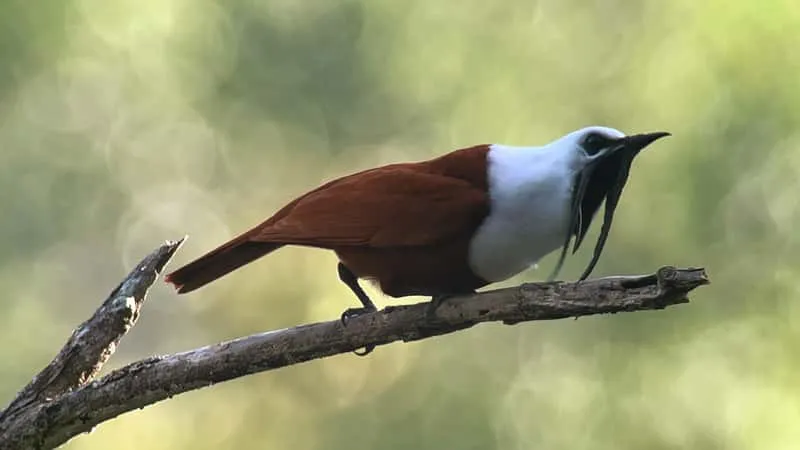
| Monteverde Cloud Forest Preserve | Over 10,000 acres (4,100 ha) | Three circuits, 1.4 to 4.1 km | 1,200 to 1,800 m | Home to the resplendent quetzal and three-wattled bellbird |
| Santa Elena Cloud Forest Reserve | Community-run reserve | 12 km | Same cloud forest band as the Preserve | More than 200 species |
| Children's Eternal Rainforest / Bajo del Tigre gate | More than 22,600 hectares reserve-wide | 4.5 km at the Bajo del Tigre gate | Lower and noticeably drier than the cloud forest gates | A partly different, drier-adapted species list |
Curi-Cancha is smaller than the Preserve or the Children's Eternal Rainforest by a wide margin, but its edge habitat, forest meeting open pasture, is exactly the kind of structure that concentrates birds along a visible boundary instead of scattering them through unbroken canopy. That's the honest reason guides send birders there first, not because it's better marketed than the others.
Curi-Cancha Reserve, the Birding Pick
Curi-Cancha sits 300 metres northeast of the Monteverde Cheese Factory. The Lowther family bought the land in 1970, it was declared a Refugio de Vida Silvestre under MINAE in 1997, and it opened to visitors in its current form in 2011. Today it's 50% virgin forest, 45% secondary growth and 5% open pasture across 83 hectares, split roughly 40% lower montane wet forest and 60% premontane wet forest, between 1,450 and 1,615 metres.
A guide is optional here, not required. Curi-Cancha's own About page says visitors are welcome to browse the trails by themselves or take a guide, and it sells a straight Without a Guide ticket alongside three guided options.
Curi-Cancha 2026 rates (last verified: August 2026)
All four rates below include the entrance fee. Children under 5 are free, and the reserve does not provide transport to or from the gate.
| Option | Adult | Ages 5 to 20 | Hours | Group cap | Duration |
|---|---|---|---|---|---|
| Without a guide (entry only) | $25 | $15 | 07:00 to 15:00 | None | Own pace |
| Natural History Tour (guided) | $55 | $45 | 08:00 to 11:00 and 13:00 to 16:00 | Max 9 | 3 hours |
| Birdwatching Tour (specialist) | $125 | $115 | 06:30 to 11:00 | Max 6 | 4.5 hours |
| Night Tour | $35 | $35 | 17:30 to 19:30 | Max 9 | 2 hours |
Reservations are required for every guided walk. One detail catches first-timers off guard: every visitor, guided or not, has to show a passport copy, driving licence or other photo ID and sign a mutual liability agreement at reception before entering. Bring it in your day bag, not left at the hotel.
Guided Mornings by Reserve
These are the guided birding mornings this site compares, most of them built around Curi-Cancha's edge habitat, with binoculars included and prices well below the reserves' own specialist rate.
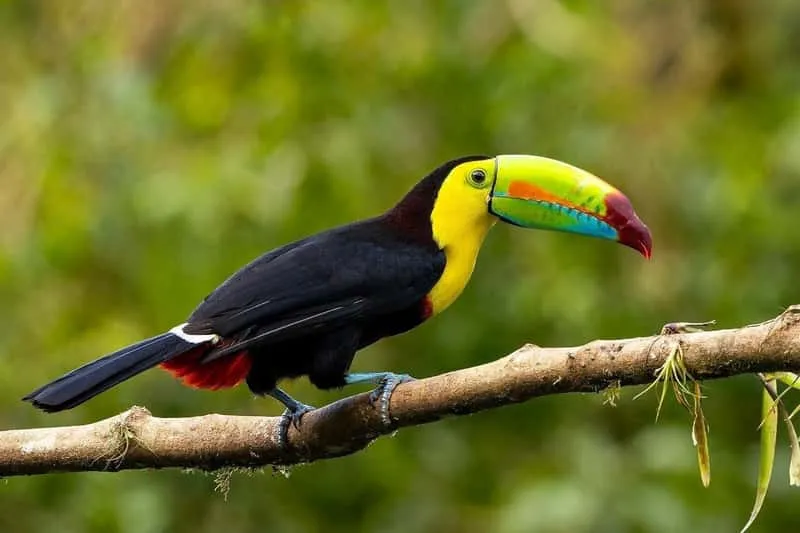 from $45
 Monteverde: Sunrise Bird-Watching Tour in Curi-Cancha
Catch the best light for birdwatching on this sunrise tour inside the Curi-Cancha Reserve. Early morning is when cloud forest birds are most active — quetzals, bellbirds, and…
- Sunrise — birds at peak activity
- Quetzals at morning feeding time
- Best light for bird photography
- Small group, quiet trails
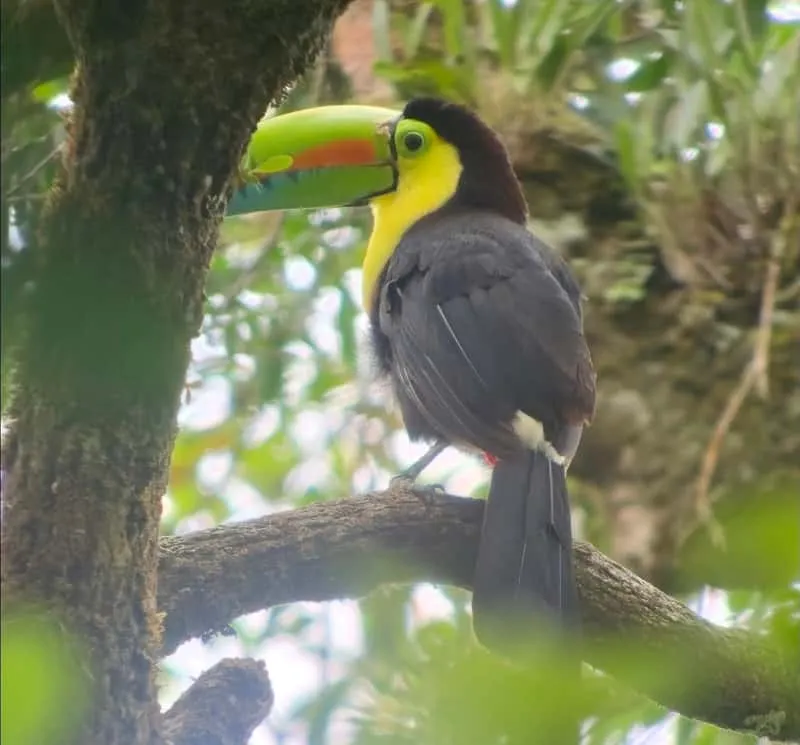 from $40
 Monteverde: Bird Watching Tour in the Curi-Cancha Reserve
Walk the trails of the Curi-Cancha Reserve with an expert birding guide. This 2.5-hour morning tour through primary cloud forest is one of Monteverde's most popular birdwatching experiences…
- Most-reviewed tour in Curi-Cancha
- Quetzals & bellbirds regularly spotted
- 2.5-hour guided morning walk
- Free cancellation
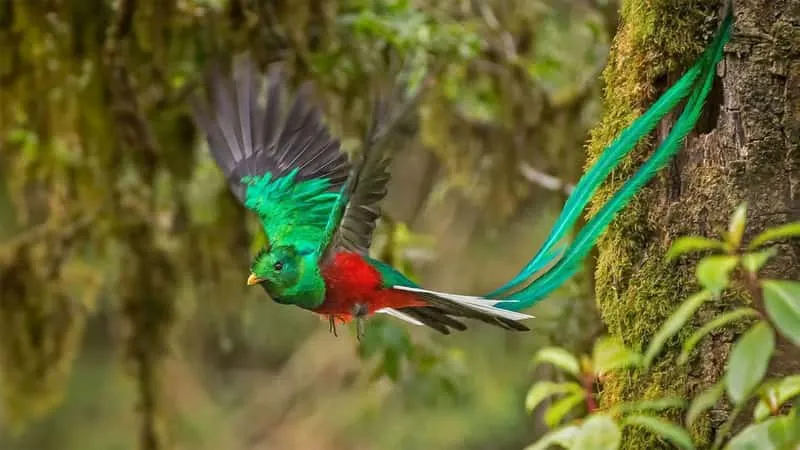 from $45
 Monteverde Quetzal Birdwatching Tour with Expert Guide
This tour is designed specifically to search for the resplendent quetzal — one of the most breathtaking birds in the Americas. An expert guide takes you to the…
- Dedicated quetzal search tour
- Guide knows nesting & feeding trees
- 2.5 hours in cloud forest
- Free cancellation
 from $72
 Monteverde Birdwatching Half-Day Tour
Explore the cloud forests of Monteverde with a specialist ornithologist on this half-day birdwatching tour. Binoculars provided. Expect to spot toucans, hummingbirds, and dozens of endemic cloud forest…
- Expert ornithologist guide
- Primary cloud forest trails
- 30–60 species in one morning
- Binoculars & scope provided
Monteverde Cloud Forest Preserve
The Preserve has been run by the Tropical Science Center, Costa Rica's first environmental NGO, since 1972, and it protects over 10,000 acres (4,100 ha) of cloud forest, by far the largest of the four in a single, contiguous block. Its own bird elevation band runs 1,200 to 1,800 metres, the point where species from the Pacific and Caribbean slopes meet along the Continental Divide.
Self-guided visits are timed-slot, starting at the Visitor Center a mile (1.5 km) below the Preserve's actual entrance. Parking is free and only at the Visitor Center, and a complimentary shuttle carries visitors up to the trailhead and back, so arrive at least 15 minutes early; the Preserve says late arrivals may not be accommodated. That shuttle system doesn't apply to the Night Walk.
Three self-guided circuits: the Essence Trail, 1.4 km and about an hour, easy, passing a centennial ficus and the Cuecha Cascade; the Heart of the Forest Trail, 2.8 km and about 1.5 hours, easy to moderate, crossing a hanging bridge past wild avocado (Lauraceae) stands, exactly what quetzals and bellbirds feed on; and the Continental Divide Trail, 4.1 km and about 2.5 hours, moderate, through dwarf forest to the La Ventana and Continental Divide viewpoints.
One thing worth knowing before you book: the Preserve does not publish a flat entrance-fee table on its website. Rates appear only inside its own booking window once you pick a time slot, so confirm the current price there rather than assuming a figure. Cancellation policy is straightforward: a full refund if you cancel at least 48 hours before your visit.
The Preserve's own species list to watch for includes the resplendent quetzal (IUCN Near Threatened), three-wattled bellbird (Vulnerable), emerald toucanet, violet sabrewing (the largest hummingbird in the region), black guan and slaty-backed nightingale-thrush.
Santa Elena Cloud Forest Reserve
Santa Elena is community-run, and its 2026 rate table, valid 1 January to 31 December 2026, is published in colones. Reused here at about ₡452 to the US dollar, checked on 15 August 2026.
| Option | Price | In USD |
|---|---|---|
| Self-guided entry, adult | ₡10,000 | About $22 |
| Self-guided, senior | ₡8,500 | About $19 |
| Self-guided, student with ID | ₡7,000 | About $15 |
| Self-guided, child 8 to 12 | ₡5,500 | About $12 |
| Guided general walk (natural history), adult | ₡20,000 | About $44 |
| Private guided walk, 1 to 3 people | ₡80,000 | About $177 |
| Specialist birding walk, 1 to 3 people | ₡100,000 | About $221 |
Hours run 07:00 to 16:00, with last entry at 15:00 on the Youth Challenge trail. Self-guided visits need no reservation; guided walks should be booked at least a day ahead. The general guided walk runs 2.5 hours, capped at 10 people, with departures at 07:30, 09:15, 11:30 and 13:00, and includes a coffee or tea.
Private and specialist walks run more flexibly between 06:00 and 14:00. Entry covers the observation tower and the orchid garden as well as the trails.
There are 12 km of trails in total, named Caño Negro (the hardest), Mundo Joven (accessible, built to Costa Rica's Ley 7600 accessibility standard), Youth Challenge (the third-highest point in Monteverde, with the tower), Encantado (the birding trail) and Del Bajo (the quiet one). The reserve's own figure is more than 200 bird species recorded, and humidity here stays above 90% year round, the highest number any of the four reserves publishes.
Santa Elena's own site is honest about the limits of any guarantee: it states plainly that it cannot guarantee wildlife sightings, given the conditions of its own ecosystem, a line worth taking at face value rather than reading as a disclaimer.
Children's Eternal Rainforest and Bajo del Tigre
The Children's Eternal Rainforest, run by the Monteverde Conservation League, is more than 22,600 hectares across seven life zones, the largest private reserve in Costa Rica by a long way. Most visitors enter through the Bajo del Tigre gate, only 2 km from town but noticeably drier than the cloud forest gates above it, which means a partly different species list built around drier-adapted birds rather than cloud forest specialists.
Bajo del Tigre has 4.5 km of trails, two viewpoints and a sunset view over the Gulf of Nicoya, and it's open daily from 07:00. A guided night walk runs daily at 17:30. Self-guided entry needs no reservation; guided walks, day or night, do, with a minimum of two people.
| Bajo del Tigre (international visitors, 2026) | Adult | Student | Child 6 to 12 | Child 0 to 5 |
|---|---|---|---|---|
| Entry, self-guided walk | $18.00 | $16.20 | $10.80 | Free |
| Guided night walk | $30.00 | $28.20 | $22.80 | Free |
| Guided day walk | $43.00 | $41.20 | $35.80 | Free |
| Private guided walk | $57.00 | $55.20 | $49.80 | Free |
Every line above carries a further 13% VAT, so add that before comparing to the other three gates. Costa Rican nationals and residents pay less, entry at $10.80, with ID required for that rate. Hotel transport for the night walk runs $8 per person, booked in advance, and children pay from age 3.
Last verified: August 2026.
2026 Fees and Hours, Side by Side
A quick summary before you book. Last verified: August 2026, so confirm current pricing on the reserve's own site close to your date, especially at the Preserve, which prices in its booking window rather than on a public page.
| Reserve | Self-guided | Guided, from | Hours |
|---|---|---|---|
| Curi-Cancha | $25 adult | $55 naturalist walk, $125 specialist birding tour | 07:00 to 15:00 self-guided |
| Monteverde Cloud Forest Preserve | Priced in the booking window | Priced in the booking window | Self-guided 07:30 to 16:00, Natural History Walk 07:30 to 13:00, Night Walk departs 18:00 to 18:30 |
| Santa Elena | About $22 (₡10,000) | About $44 general walk, about $221 specialist walk for 1 to 3 | 07:00 to 16:00, last entry 15:00 |
| Bajo del Tigre | $18.00 plus 13% VAT | $43.00 day walk plus 13% VAT | Open daily from 07:00 |
Which Reserve Suits Your Morning
If you want the best shot at a long species list in one morning
start at Curi-Cancha, its edge habitat and small footprint concentrate birds better than a larger reserve does.
If budget matters most
Santa Elena's self-guided ticket at about $22 is the cheapest gate price of the four.
If you want a well-marked self-guided walk with a shuttle handling the transport
the Preserve's three timed circuits, from 1.4 to 4.1 km, are built for exactly that.
If you'd rather avoid the crowds at the two best-known gates
Bajo del Tigre is quieter and drier, with a genuinely different bird list to show for it.
If the resplendent quetzal is the one bird you came for
read the quetzal tour guide before you pick a reserve, timing matters more than which gate you choose.
How the Reserves Differ for Birds, Not for Scenery
Every one of these four reserves is genuinely beautiful, and scenery is not where they differ in any way that changes a birding morning. What differs is structure. Curi-Cancha's mix of virgin forest, secondary growth and pasture edge creates the kind of visible boundary line where birds cross in and out of cover, which is why a smaller reserve can outperform a much larger one for species turnover in a single visit.
The Preserve and Santa Elena sit in denser, more continuous cloud forest at similar elevation bands, which rewards patience and a longer walk more than a fast circuit. Bajo del Tigre's lower, drier ground pulls in a different set of birds entirely, adapted to that transitional forest type rather than to full cloud forest humidity. None of this means one reserve has better birds than another.
It means the reserve you pick should match the kind of morning you actually want, a short, concentrated walk, a longer immersive one, or a quieter, drier alternative.
For the practical arithmetic on whether to add a guide at any of these gates, see do you need a guide for birdwatching in Monteverde. For what actually goes in your day bag, what to bring birdwatching in Monteverde covers it without repeating the reserve rules here.
I get asked constantly which reserve to book first, and my honest answer hasn't changed in years: Curi-Cancha, then decide from there based on how the morning goes and what you still want to see.
None of the four reserves will hand you a guaranteed sighting, and any page that implies otherwise isn't being straight with you. What they do offer, each in a different way, is a real chance, and the choice between them comes down to habitat and hours more than which one has the prettiest brochure.
Frequently Asked Questions
Which Monteverde reserve is best for birdwatching?
Curi-Cancha is the usual first pick, its mix of virgin forest, secondary growth and open pasture edge across 83 hectares concentrates species better than the larger cloud forest tracts nearby, even though it isn't the biggest reserve on the list.
How much does each Monteverde reserve cost in 2026?
Curi-Cancha's self-guided ticket is $25, Santa Elena's is about $22 (₡10,000), and Bajo del Tigre's is $18 plus 13% VAT. The Monteverde Cloud Forest Preserve prices each timed slot only inside its own booking window, so no flat figure is published.
What time do the Monteverde reserves open?
Curi-Cancha's self-guided window runs 07:00 to 15:00, Santa Elena 07:00 to 16:00 with last entry at 15:00, the Preserve's self-guided walk 07:30 to 16:00, and Bajo del Tigre opens daily from 07:00.
How does Santa Elena compare in price to the Monteverde Cloud Forest Preserve?
Santa Elena publishes a clear rate table, about $22 self-guided. The Preserve doesn't publish a flat entrance fee at all, it prices each timed slot inside its own booking window, so it isn't possible to say which is cheaper without checking that window directly.
How can you visit two reserves in one day?
It's physically possible since Curi-Cancha, the Preserve and Santa Elena all sit within a short drive of Santa Elena town, but the best birding hours at any of them are in the first few hours after opening, so a two-reserve day usually means a strong early morning at one and a quieter, shorter visit at the second in early afternoon.
Which reserve gives the best chance of seeing the resplendent quetzal?
The Preserve's Heart of the Forest Trail passes wild avocado stands the quetzal feeds on, and Curi-Cancha also reports regular sightings in season. Timing matters more than the gate you pick, see the quetzal tour guide for the season detail.