Monteverde Cloud Forest Birds: A Species Guide
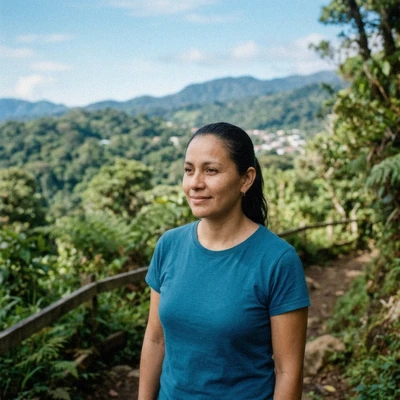
Monteverde cloud forest birds number more than 400 recorded species in the greater Monteverde area, and on any single guided morning a visitor might reasonably expect ten or more without leaving a marked trail. The two birds most people come for, the resplendent quetzal and the three-wattled bellbird, are only the start: toucans, toucanets, hummingbirds and a long list of tanagers and migrant warblers fill in a morning's list at Curi-Cancha, the Monteverde Cloud Forest Preserve and Santa Elena Cloud Forest Reserve alike. This guide works species first, not month first, so if you already know which birds you're hoping for, the where and when for each is here.
Quick answer
On a guided morning in the Monteverde cloud forest you'll almost always see hummingbirds and tanagers, very often a toucan or trogon working the canopy, and on a good day the resplendent quetzal or three-wattled bellbird calling from a high perch. Neither headline species is ever guaranteed, but a guide who works by ear as much as by eye shortens the odds considerably.
Key takeaways
- Toucans, toucanets and hummingbirds turn up on nearly every guided morning, whatever the season
- The resplendent quetzal is IUCN Near Threatened and most reliably found in its March to June breeding season, detailed on our best time to visit guide
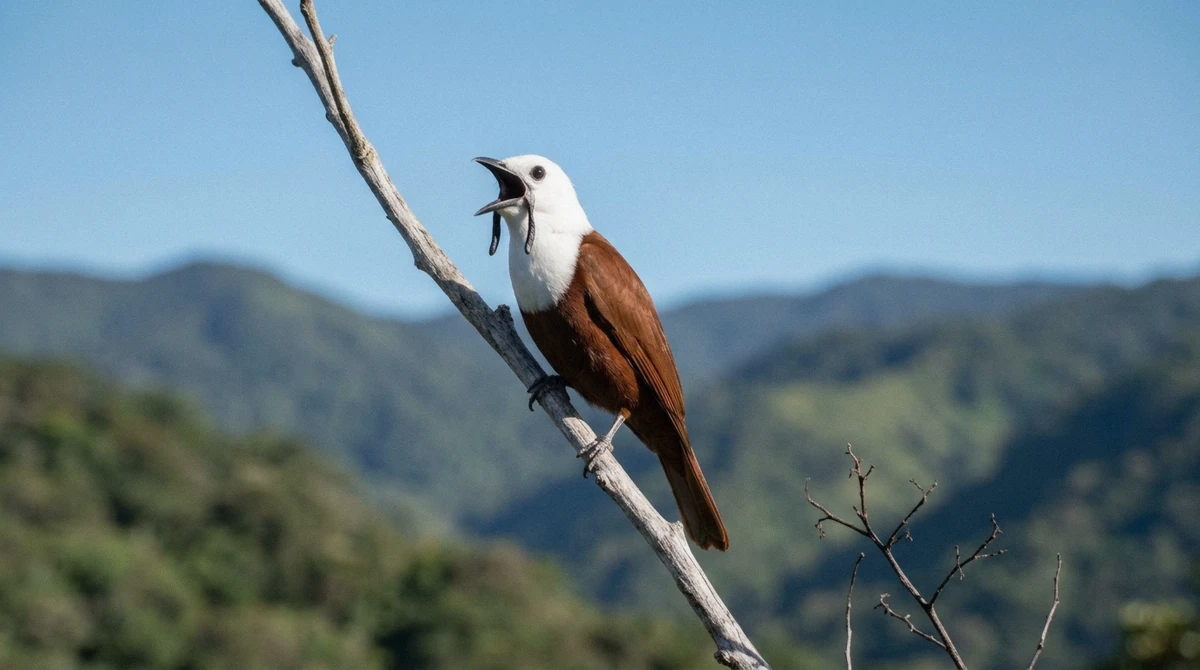
- The three-wattled bellbird, IUCN Vulnerable, is easier to hear than to see, its odd metallic call carries a long way
- More than 400 species have been recorded across the greater Monteverde area, over 200 at Curi-Cancha alone
- Guides work by ear as much as by eye, learning a call first is often faster than spotting the bird itself
- The sunrise Curi-Cancha tour covers the reserve with the most reliably reported quetzal and bellbird activity on this list
Headline Species: Where and When
A working shortlist before the species accounts below, ordered by how consistently each one turns up on a guided morning.
| Species | Where in Monteverde | Best months | How likely |
|---|---|---|---|
| Violet sabrewing | Forest edges and flowering shrubs, all three reserves | Year round | Nearly every trip |
| Emerald toucanet | Mid-canopy fruiting trees, Curi-Cancha and the Preserve | Year round | Most trips |
| Black guan | Low branches and forest floor, Curi-Cancha and the Preserve | Year round | Most trips |
| Tanagers (mixed flocks) | Mid-canopy throughout the forest | Year round | Most trips |
| North American migrant warblers | Mixed flocks throughout the forest | October to March | Most trips in season |
| Three-wattled bellbird | High exposed perches, all three reserves | March to July, peak May and June | Regular but not every trip in season |
| Resplendent quetzal | Fruiting laurel (Lauraceae) stands, Curi-Cancha and the Preserve | Breeding March to June | Regular but not every trip in season, lucky-day outside it |
| Slaty-backed nightingale-thrush | Understorey, mainly Preserve trails | Year round | Regular but not every trip |
Nothing on this list is promised on any single walk, the honest way to read it is as a pattern built from what the reserves and guides report seeing, not a checklist a morning owes you.
The Resplendent Quetzal
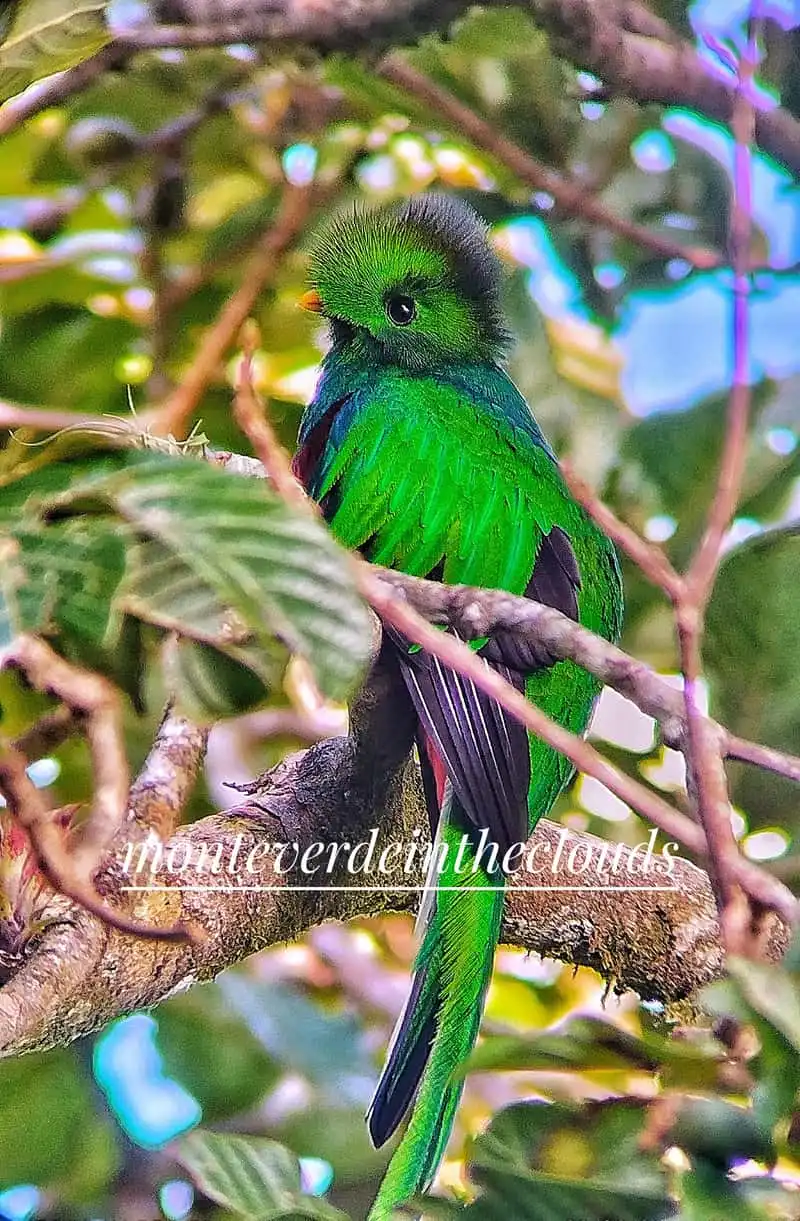
The resplendent quetzal (Pharomachrus mocinno) is IUCN Near Threatened, on the Partners in Flight Red Watch List, and classed by the American Bird Conservancy as a Tipping Point species that has lost more than half its population in 50 years. In breeding condition the male grows elongated upper tail coverts up to three feet long, trailing behind an emerald body and crimson breast, one of the more striking sights in Neotropical birding. Its diet centers on wild avocados of the laurel family, which is exactly why the Monteverde Cloud Forest Preserve highlights its own stands of Lauraceae trees along the Heart of the Forest Trail.
Quetzals nest in a cavity in rotted wood, often an old woodpecker hole, laying two eggs that both parents incubate for about 18 days before the young fledge roughly a month later, with some pairs raising two clutches in a season. That breeding activity, March to June with February and July as the soft edges, is the window when a guide can work from a known nest tree rather than a hopeful scan of the canopy. For the full month-by-month version of this calendar, see our best time for birdwatching in Monteverde guide, and for the tour built specifically around this bird, our quetzal tour guide.
Two numbers anchor the bird. In breeding condition the male grows upper tail coverts up to 3 feet long, the American Bird Conservancy's figure, and the Preserve places its bird communities in the 1,200 to 1,800 metre band on the Continental Divide, where Pacific and Caribbean slope species meet. That band is why one morning here can turn up birds from two watersheds.
Mornings Built Around These Species
These mornings run with guides who work by ear as much as by eye, the fastest way to add species most visitors would miss on their own.
 from $85
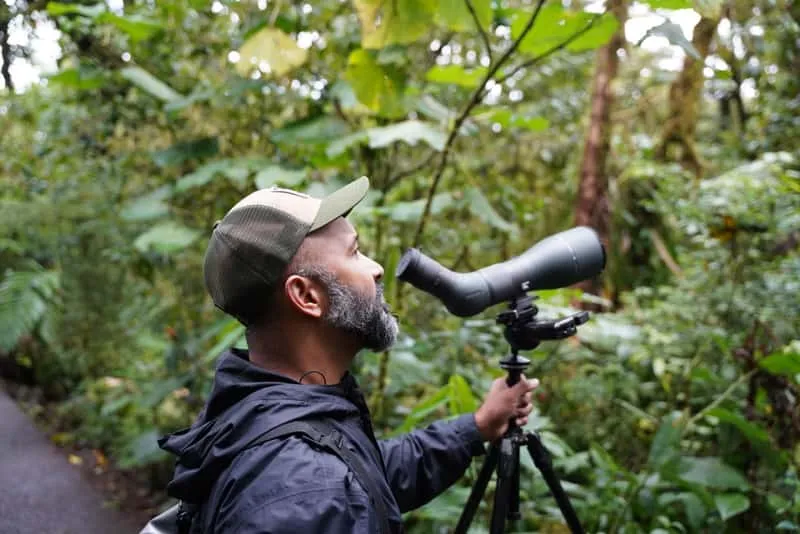
 Bird Watching Tour Monteverde — Curicancha Reserve
A full 5-hour private bird watching tour inside Curicancha Reserve, one of the most biodiverse patches of cloud forest in all of Monteverde. Binoculars, species checklist, and transport…
- Full 5-hour forest immersion
- Spotting scope & species checklist
- Transport included
- Ideal for serious birders
 from $90
 Birdwatching Tour in Monteverde with an Expert Local Guide
Join a born-in-Monteverde birding specialist for a 4-hour sightseeing tour through the cloud forest. The guide's lifetime of local knowledge means you'll find species most visitors miss —…
- Born-in-Monteverde specialist guide
- Rare species others miss
- 4-hour deep forest walk
- Private or small group option
 from $66
 Birding in Monteverde — Guided Tour with Binoculars & Photos
A focused 2-hour birding experience perfect for those short on time. Binoculars included, and the guide captures professional bird photos through a spotting scope — so you leave…
- Professional scope bird photography
- Leave with real images of species seen
- Binoculars & scope included
- 2-hour focused birding session
The Three-Wattled Bellbird
The three-wattled bellbird (Procnias tricarunculatus) is IUCN Vulnerable and, like the quetzal, an altitudinal migrant. It's reported present and calling in Monteverde roughly March to July, with peak calling most often reported in May and June, after which birds move to lowland forests of northern Costa Rica and Nicaragua. The male's call, an odd, carrying metallic note unlike anything else in the forest, comes from high, exposed perches and repeats through most of the daylight hours, which is why a guide often locates one by ear well before it's visible in the canopy.
Our bellbird tour page covers the specific sunrise departure built around this bird, including which reserve trails give the guide the best chance of tracking a calling male to a visible perch.
Toucans, Toucanets and Trogons
Emerald toucanet is the small, all-green toucan relative most visitors see first, working fruiting trees in the mid-canopy at both Curi-Cancha and the Preserve. Its larger relatives, the keel-billed and chestnut-mandibled toucans, range through the same forest but favor slightly lower elevations and show up less predictably on a single morning.
Trogons, the quetzal's own family, include several smaller, quieter cousins that a guide will often point out specifically because visitors assume every flash of green and red in the canopy is a quetzal. It usually isn't, and knowing the difference in the field is one of the small skills a good guide passes on early in a walk.
Hummingbirds
The violet sabrewing is the largest hummingbird in the region, a heavyweight presence at flowering shrubs and forest edges across all three reserves, and one of the most reliable sightings on this whole list regardless of season. Monteverde's cloud forest hosts a long list of smaller hummingbird species alongside it, feeding at everything from garden verbena to epiphytic flowers high in the canopy.
A still five minutes at any flowering patch usually produces more hummingbird activity than an hour of walking, which is why guides will often stop and wait rather than keep moving once they spot a good stand of flowers.
Tanagers and Migrant Warblers
Tanagers make up some of the most colorful and least effort-intensive sightings in the forest, moving in mixed flocks through the mid-canopy at all hours of the day. Spotting one tanager in a mixed flock is often the cue to stop and watch, since several species tend to travel together.
North American migrant warblers, Wilson's, Tennessee and black-and-white warbler among them, are present broadly in the cloud forest from October to March, adding a wave of smaller, more familiar species to a winter morning's list for visitors used to spotting them at home.
Species by Reserve
The reserves don't publish a species-by-species breakdown against each other, so this table reads as reported patterns rather than a strict checklist per gate. Curi-Cancha and Santa Elena each report more than 200 species overall; the Preserve is the only one that names a specific shortlist of species to look for on its own site.
| Species | Where most reliably reported | Also reported elsewhere in Monteverde |
|---|---|---|
| Resplendent quetzal | Curi-Cancha and the Preserve's Lauraceae stands | Reported area-wide during breeding season |
| Three-wattled bellbird | All three reserves during calling season | No named exceptions |
| Emerald toucanet | Preserve and Curi-Cancha | Also reported at Santa Elena |
| Violet sabrewing | All three reserves | No named exceptions |
| Black guan | Curi-Cancha and the Preserve | Less consistently reported at Santa Elena |
| Slaty-backed nightingale-thrush | Preserve trails | Also reported at Curi-Cancha and Santa Elena |
| Migrant warblers, October to March | All three reserves | No named exceptions |
Understorey and Forest Floor Birds
Not every bird in Monteverde works the canopy. Black guan, a large, dark, turkey-sized bird, is a genuine local conservation success and moves through low branches and the forest floor at both Curi-Cancha and the Preserve, often closer and easier to watch calmly than anything overhead.
Slaty-backed nightingale-thrush and several smaller understorey species work the leaf litter and low shrubs along quieter stretches of trail, more often heard first than seen. A guide's ear for a call in the undergrowth adds several species to a list that a visitor scanning only the canopy would miss entirely, and it's a genuinely different kind of birding than craning your neck upward for an hour, one worth building into any full morning.
What to Target on a Single Morning
If you have one morning and want the widest species list
book a longer guided walk and let the guide route you toward whatever is active that day, rather than fixating on one bird.
If the quetzal is the one bird you came for
visit March to June and book a guide who works a known nest tree, ideally at Curi-Cancha or the Preserve's Lauraceae stands.
If the bellbird's call is what you're after
come in May or June and let a guide work by ear first, the call carries long before the bird is visible.
If you want reliable sightings without chasing a single species
hummingbirds, toucanets and tanagers show up on nearly every morning regardless of season.
If you're birding with a group that includes non-birders
the understorey species and forest floor birds tend to sit still longer and are easier for everyone to actually see.
No list, however long, replaces a morning with a guide who knows which tree fruited last week and which perch a bellbird has been using all month. The species here are the ones worth knowing before you go, not a promise of what any single walk will produce, and the reserves themselves are careful to say the same thing about their own trails.
For the calendar behind all of this, our best time for birdwatching in Monteverde guide lines up each species against the month, and our comparison of the four reserves covers which gate suits which target list. Whatever you're hoping to add to your own list, the birding tours in Monteverde compared here run early, when the forest is at its most active.
Frequently Asked Questions
What birds live in the Monteverde cloud forest?
More than 400 species have been recorded across the greater Monteverde area, from hummingbirds and tanagers seen on nearly every walk to headline species like the resplendent quetzal and three-wattled bellbird that depend more on season and luck.
Where do you see the resplendent quetzal in Monteverde?
Curi-Cancha and the Monteverde Cloud Forest Preserve, particularly around their fruiting laurel (Lauraceae) stands, are the most reliably reported locations, and mainly during the March to June breeding season.
What does the three-wattled bellbird sound like?
An odd, carrying metallic note unlike anything else in the forest, repeated from a high, exposed perch through most of the daylight hours during its March to July calling season.
How many hummingbird species live in Monteverde?
The reserves don't publish an exact hummingbird species count, but the violet sabrewing, the largest hummingbird in the region, is one of the most reliably seen among a genuinely long list of smaller species.
Which birds are easiest to see on one morning?
Hummingbirds, tanagers and toucanets are the most consistent sightings on any single guided morning, in any season, well ahead of the headline quetzal and bellbird.
What is the difference between a trogon and a quetzal?
A quetzal is technically a trogon, part of the same family, but the resplendent quetzal is set apart by its far longer tail coverts in breeding condition and its emerald-and-crimson coloring. The family's other trogons are smaller and quieter, and easily mistaken for a quetzal by a first-time visitor.